A Consumer's Future: large context windows, autonomous agents, and text-to-action capabilities

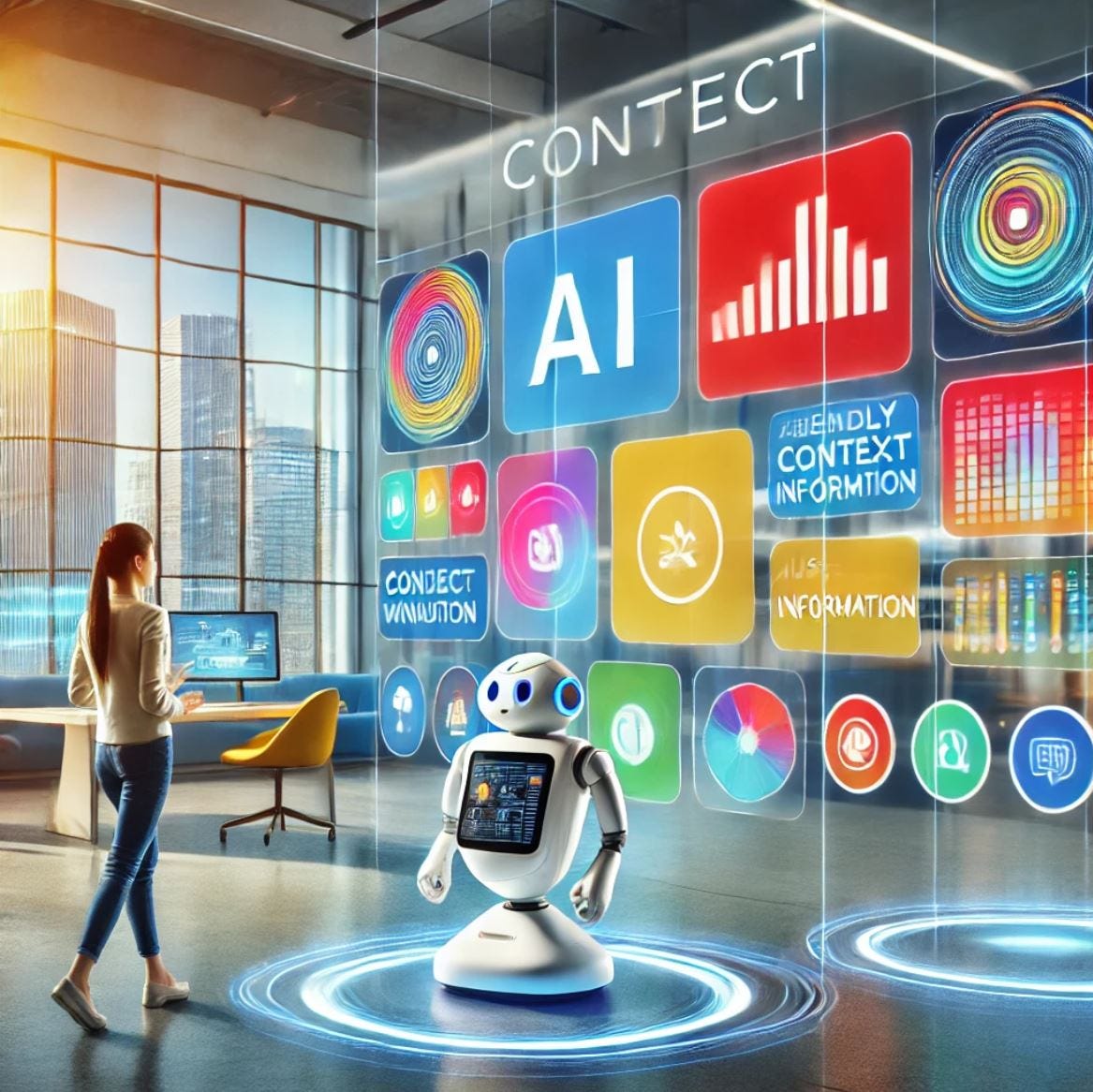
No surprise to anyone that massive changes are on the horizon because of AI. It’s also no surprise that these changes will impact consumers and businesses. For consumers, it could see an entire new layer of engagement come to exist that filters everything for us. For businesses, it could mean literally needing to be best-of-breed to get past new gatekeepers, and it could also mean an entire ecosystem existing where they plug in APIs and the personalized agents of consumers take what they like to show to their audience. While it’s tempting to sit back and say this is way in our future, you shouldn’t be surprised if we start to see this in a year or so. Certainly less than 3 years, anyway. Are you ready?
Context Windows, AI-Agents and Text To Action
“We’re heading towards a world where every individual could have their own AI programmer, able to build apps and automate tasks with just a command. This changes everything.”
Starting off, we’ll dive into the massive changes coming in artificial intelligence, specifically large context windows, autonomous agents, and text-to-action capabilities. These are technologies that will have an impact far beyond what most of us can imagine, potentially bigger than social media. The next year or two will be game-changing, and here’s why.
Let’s start with context windows. Think of these as the short-term memory of AI.
What’s incredible is that these windows are getting longer, which means AI can now process and recall massive amounts of data at once. Picture this: you ask an AI to read 20 books, feed it the content of those books, and say, “Summarize what they all say.” The AI might forget some details along the way, much like how human brains work, but the insights it can generate from that are staggering.
This is already happening, and it’s only going to grow in power. The ability for AI to hold and reference large blocks of information means that research, analysis, and problem-solving are about to get a whole lot faster and more accurate.
Next, let’s talk about agents. These are AI systems that don’t just read or understand – they learn, test, and adapt. Imagine an AI that reads a chemistry textbook, discovers the principles of chemistry, and then tests its findings in a lab. And then it feeds those results back into its understanding, learning as it goes. That’s where we’re headed.
These agents are the next step in self-improving systems. They’re not just tools; they’re independent assistants that can drive research, innovation, and even creativity. The potential applications in fields like material science, pharmaceuticals, and more are limitless.
But the real magic comes with text-to-action. This is where AI can take a natural language command and turn it into real-world action.
Here’s a wild example: imagine the government bans a popular app like TikTok. You could ask your AI to “build me a TikTok clone, grab all the user preferences, and launch it in 30 seconds.” While that exact scenario might not be technically feasible right now, the idea of going from simple commands to full digital execution is just around the corner.
Think about it – soon, everyone could have a personal AI programmer capable of building apps, writing code, and automating tasks in seconds. This is going to revolutionize how we interact with the digital world.
The Cost of Frontier Models - you probably can’t afford this
Now, what’s happening behind the scenes with AI development? The gap between the big players – let’s call them the “frontier models” – and everyone else is growing. Six months ago, it looked like smaller companies were catching up, but now? It seems the gap is widening.
We’re talking about companies needing $100 billion, $300 billion, or even more to build the next generation of AI. For example, Sam Altman, the CEO of OpenAI, believes it will take at least $300 billion to push AI to the next level. A decade ago we were talking about the $100 million it cost to launch a new search engine such as Bing. Developing new search has become a rounding error compared to developing new AI systems.
But energy is a huge factor here, too. To power these models, we’re going to need partnerships, like those with Canada, where hydropower is abundant. Alternatively, we could see countries in the Middle East fund this development, but national security concerns might complicate that.
And here’s another critical point: we’ve already used up most of the world’s available data. Moving forward, the key will be doing more with less – getting more value from the data we already have and creating synthetic data that’s actually useful.
AI models are going to have to get better at learning from limited datasets, and that’s where innovations in efficiency and creativity are going to play a big role.
This is all pretty important, big-picture stuff,...yet…there’s more!
“The debate between open-source and closed-source AI is heating up. Will collaboration win, or will companies keep their multi-billion-dollar models behind closed doors?”
Another important shift we’re seeing is the debate between open-source and closed-source AI. Historically, companies like Google have operated in a closed-source environment, protecting their algorithms at all costs. But now, many believe that open collaboration will drive the next wave of innovation.
The big question is: can companies afford to share their AI models when development costs are so high? This is going to be a major issue as we move forward.
And looking globally, we’re heading into a battle for AI supremacy. Right now, the U.S. is leading, but China is closing the gap. Chip technology is a critical factor. The U.S. has about a 10-year lead on China when it comes to cutting-edge chip development, and both countries are racing to maintain their advantages.
This competition isn’t just about technology – it’s about knowledge supremacy, and it’s going to shape the next decade.
Misinformation, never mind Hallucination
So, now, let’s talk about misinformation. One of the biggest challenges AI presents is its ability to generate highly convincing misinformation. As we approach major elections, this is a threat to democracy itself. Social media platforms, where much of this content is spread, aren’t equipped to handle it.
The public is going to need to sharpen their critical thinking skills, but that’s no easy task. The biggest danger isn’t just outright falsehoods – it’s muddying the waters so much that the truth becomes hard to find.
Finally, let’s consider the future of programming. As AI evolves, the role of traditional programmers might diminish. Eventually, we may not need human programmers at all – AI will handle the code, perhaps writing complex software that we can’t even read ourselves.
Imagine a world where computer scientists work alongside AI, using it as a partner to solve problems. That’s the direction we’re heading.
“The future of programming might not involve programmers at all. As AI takes over the code, humans will become collaborators, not coders.”
Shift Hits The Fan - can businesses keep up?
As we wrap up here, it’s clear we’re on the brink of a massive shift in AI, and it’s not just the big tech companies that will feel the impact. From large context windows that enhance memory, to autonomous agents that learn and improve, to text-to-action systems that can execute commands in seconds – these technologies are going to reshape how small and mid-sized businesses operate, and how consumers engage with products and services.
For consumers, these advancements will mean more personalized experiences. Imagine your favorite brands delivering exactly what you want, when you want it, powered by AI that understands your preferences and acts in real-time. Customer service will be revolutionized with AI agents that solve problems instantly and anticipate needs before they arise. Or even personalized AI-agents that essentially gate-keep our time - reducing spam and reducing the access businesses have to your inbox and phone number. These personalized systems will work hand-in-hand with companies to bring the consumer things of interest, not things of campaigns. These agents could even be an ecosystem where retailers plug in their product and service APIs, and depending on my settings, the agent knows what to show me and what to avoid.
For businesses, especially SMBs, these technologies will be game-changers. Companies that don’t have massive tech teams will now be able to leverage AI-driven tools to automate everything from marketing to operations. Whether it’s building a custom app, generating marketing content, or managing customer data, AI will allow small businesses to operate like large enterprises, but without the massive overhead. We’re already seeing large enterprise companies cutting back on headcounts, often in favor of AI-solutions.
Text-to-action means that a small business could automate its entire workflow, cutting down on costs, and increasing efficiency. AI-driven marketing will enable businesses to reach the right audience, at the right time, with the right message, all without needing a large team to execute these tasks.
"AI is leveling the playing field, giving small businesses tools to automate, innovate, and compete with larger companies. The future of AI is here—can businesses keep up?"
The playing field is going to level out. Small and mid-sized businesses will gain access to tools that were once reserved for big corporations. They’ll be able to move faster, adapt to changing markets, and create innovative products and services that rival their larger competitors. This democratization of AI means that success will be determined not by the size of the company, but by how effectively they can adopt and integrate these new technologies.
The next few years will define how AI integrates into everyday life and business operations. For those who embrace it, the opportunities are limitless. So buckle up, because the future of AI is arriving faster than anyone could have imagined – and it’s going to transform how we all work, shop, and interact in ways we’re only beginning to understand.